Home/Birds
Bird Removal in Tuscaloosa
Almost every native bird is protected by federal law, active nests included, so what is legal depends on the species.
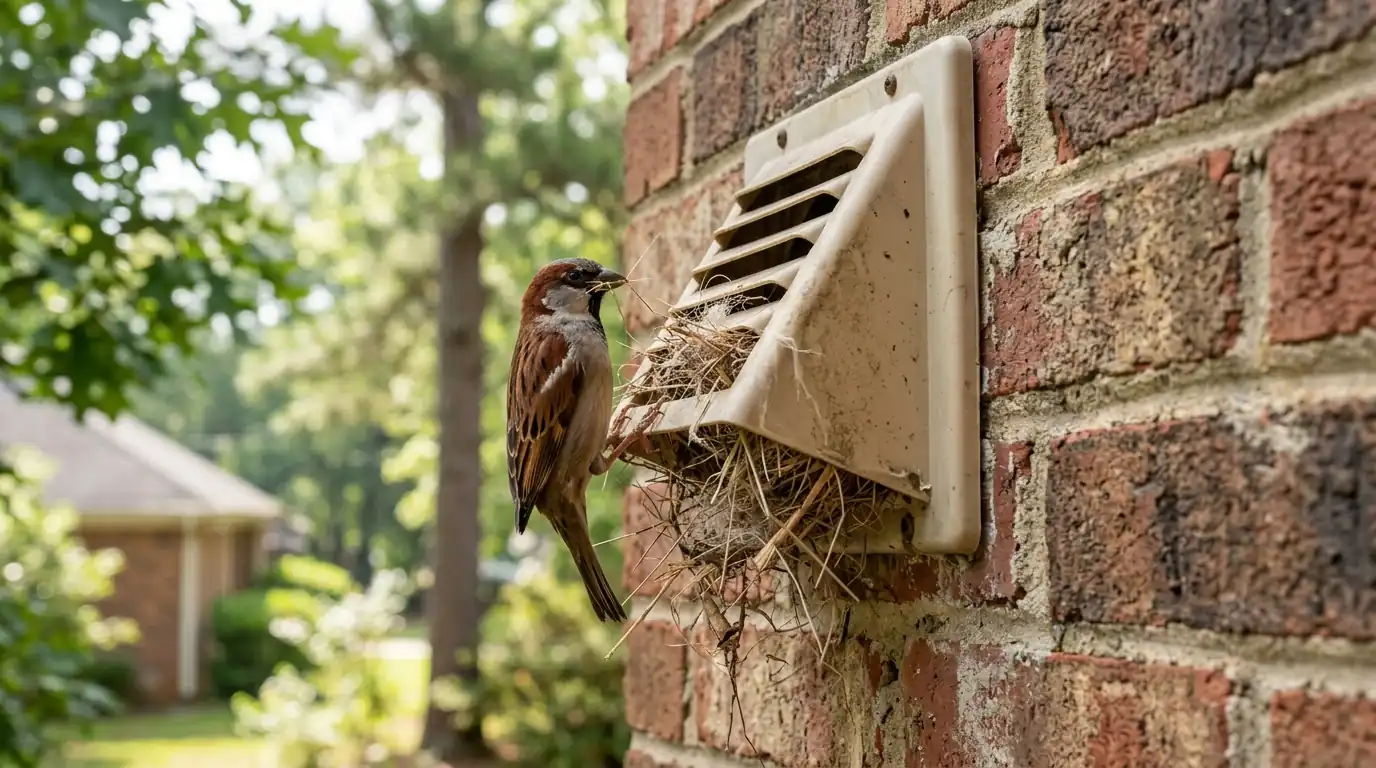
Vents are the residential issue and older commercial masonry is the other one. Only pigeons, European starlings and house sparrows fall outside federal protection; an active nest of anything else in a dryer vent or gable louvre cannot legally be pulled out, which surprises people who were expecting a five-minute job.
Birds in Tuscaloosa County: who does what
Alabama’s wildlife division does not remove nuisance wildlife from private property unless public safety is at risk. It permits Nuisance Wildlife Control Operators to do it instead, and the state’s own wording is that they do so at the landowner’s or tenant’s expense. In a city where a very large share of the housing is rented, that last phrase is not academic; it is the argument that delays the job while the animal keeps chewing, so settle who is paying early.
For identifying an animal or damage before anyone is paid to look, the Alabama Cooperative Extension, Tuscaloosa County office is at 1800 McFarland Blvd E #342, Tuscaloosa, AL 35404, (205) 349-4630 (office page).
What Alabama law says about birds
Alabama protects every nongame bird except crows, starlings, house sparrows, Eurasian collared doves, pigeons and other non-native species. Starlings, crows and house sparrows have no closed season or bag limit (daylight hours, 2026-27). All Alabama rules →
Sources: Alabama WFF: protected nongame birds; Alabama WFF: starlings, crows and house sparrows; Outdoor Alabama, Nuisance Animal Control. Checked October 2026.
Signs, and why they matter
- Chirping from a bathroom fan, dryer vent or kitchen exhaust
- Nesting material poking from a vent hood or dormer gap
- A dryer that has stopped venting properly: a real fire risk
- Blocked dryer vents are a documented cause of house fires
- Droppings carry histoplasmosis and cryptococcosis
How removal works
Identify the species first, because that determines what is legal. Where removal is permitted, the nest is cleared, the duct or vent cleaned, and a purpose-made vent guard fitted so it cannot be renested. Where the species is protected and the nest is active, the lawful answer is to wait, then exclude.
Bird questions
How much does bird removal cost in Tuscaloosa?
$200 – $600 depending on access, depending on access and whether young are present. After a long stay in an attic the cleanup is often the bigger bill (attic restoration).
Is there a wrong time of year to deal with birds?
Spring and early summer nesting is the peak, and also the period when an active nest is most likely to be legally protected.
Request a quote
We read every request and pass it to a licensed wildlife operator covering Tuscaloosa where one is available. We are still building our list of operators here, so we cannot promise one is available or say how quickly they will respond.